A PAPAS field video featuring nematologist Inga Zasada and Washington potato grower Brett Reynolds draws attention to an early management decision: how to collect soil samples that answer the right question. The update complements the project’s published guidance on designing a nematode-sampling programme before choosing a response.
Start with the purpose of the sample
The field update supplied to Potatoes.News follows discussion of a field moving from wheat towards potatoes. Its practical emphasis is on sampling timing, depth and interpretation. Those choices influence what a laboratory result can tell a grower about a particular field.
PAPAS’s published sampling guide, by Inga Zasada, explains why a sampling design should reflect the target nematode and the question being asked. Nematodes are not distributed uniformly, and the relationship between a composite sample and the area it represents matters when interpreting results.
Wochentags. Mit einem Klick abmelden.
The examples in the guide are context-specific. They are not a universal instruction to use one fixed sampling density, depth or calendar date on every potato farm. A grower needs an approach suited to the field history, suspected problem and diagnostic method, discussed with the relevant laboratory and agronomic adviser.
A laboratory number needs a field record
A useful submission begins before a bag reaches the laboratory. The grower should be able to explain which field or management area the material represents and how it was collected. Without that link, a result may be difficult to compare with another season or with a different part of the farm.
This is a management issue as well as a diagnostic one. If future sampling changes the area, timing or collection method, an apparent difference between results may raise questions about comparability. Keeping a consistent record helps advisers separate the evidence about the field from the effects of a changed sampling approach.
The appropriate interpretation also depends on what the laboratory measures and reports. A result should therefore be discussed in relation to the target organism and crop situation. It is not, by itself, a universal instruction to apply a particular product or to assume that all possible nematode problems have been ruled out.
Make the result useful for the next decision
For potato businesses planning a crop after another rotation crop, the immediate value of the PAPAS material is a better conversation about evidence. What decision will the sample support? Which uncertainty matters most? Can the collection plan provide information at the scale needed to make that decision?
The next step is to agree the sampling and handling requirements with a suitable diagnostic laboratory before collection, and to retain the location and method records with the report. Management options can then be assessed with an adviser using the identified problem and local requirements.
The video and guide are educational resources, not a report of eradication or a promise that sampling alone reduces crop losses. Their contribution is to put diagnosis and interpretation ahead of intervention. For growers, that makes the evidence easier to use and reduces the temptation to treat a single laboratory number as a complete description of the field.
Was dies für landwirtschaftliche Betriebe und den Markt bedeutet
- Define the target organism and the decision before choosing a sampling plan.
- Keep field location, timing and collection-method records alongside laboratory results.
- Agree the approach with the diagnostic laboratory and adviser; avoid universal treatment rules.
Quellen
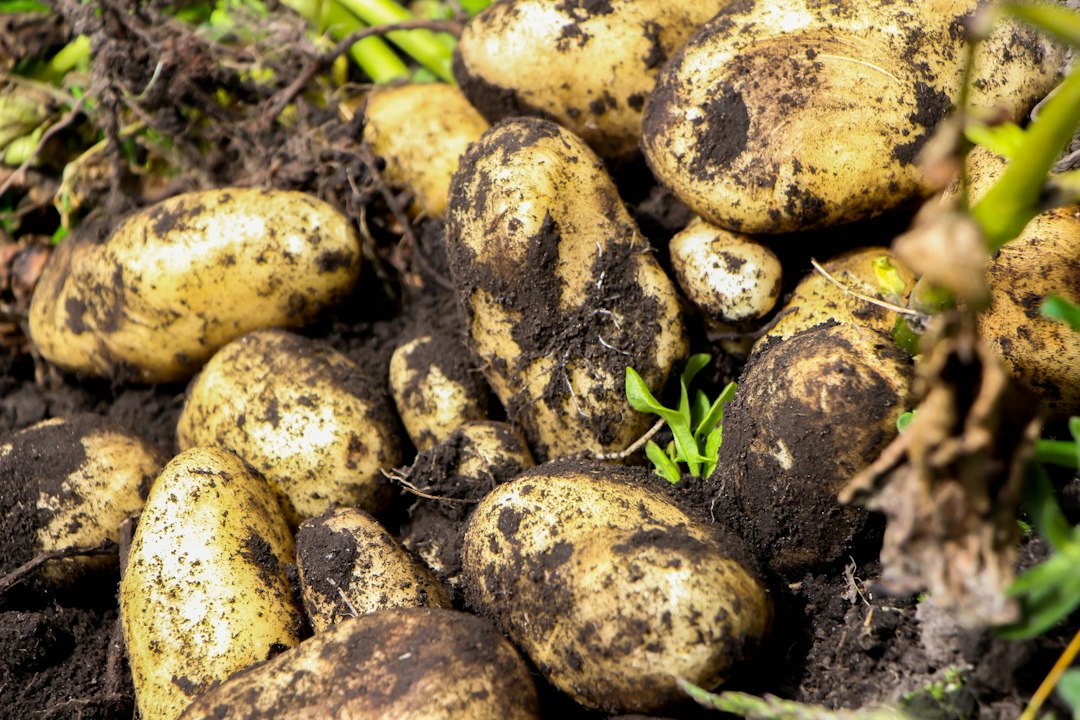
Freshly dug potatoes with soil; illustrative photograph, not the PAPAS demonstration field. Photo: javier albuja / Unsplash.