
DER RUSSISCHE SAMENKARTOFFELMARKT NIMMT EINEN ANDEREN WEG

In Russia, #HZPC is using an unconventional strategy to secure its potato trade for the future: in 2019, a small breeding company was set up to provide Russian contract growers with pre-basic seed potatoes. In 2020, the production of mini-tubers was added too. These choices were made due to Russia’s aim to be entirely self-supporting within its borders and completely shut out the import of seed potatoes in due course.
DER RUSSISCHE SAMENKARTOFFELMARKT NIMMT EINEN ANDEREN WEG
Exports to Russia have been difficult since 2014 and things don’t seem to be improving. As well as the drastic reductions of the import of chickens, pigs and cows over the past decades, Russia is also clearly decreasing the import of seed potatoes. The country, however, is nowhere near ready to realise the same quality levels as they do with European seed potatoes. Furthermore, the potato processing industry sets high requirements that are often not met by local products. This means that imports are still tolerated but there is a genuine need to build up expertise and develop quality production processes. HZPC has therefore identified an opportunity to serve the Russian growing market by means of an alternative route.
Wochentags. Mit einem Klick abmelden.

Qualität versus Volumen
In Russland essen sie viel Kartoffeln. Laut Pim Bemelmans, Geschäftsführer der Tochtergesellschaft HZPC Sadokas in Sint Petersburg, the current demand fluctuates at around six to seven million tons. Furthermore, the processing industry in Russia is expanding, along with the demand for supply continuity and quality. ‘This presents opportunities for HZPC’, explains Pim. ‘Russian growers can realise higher and better yields if they focus on quality but the topic is not yet very high on the agenda. Because Russia is a vast country, they think more in terms of volume. There are more than enough square meters. Farms are enormous businesses covering 2000-3000 hectares with a general manager who lives miles from the actual growing area. This is hard to compare to Dutch growers who jump on their tractors and manage the crops themselves.’
HZPC Sadokas has built up a reasonably solid basis in Russia, with a number of major contract growers who also work with fellow growers from competing companies. ‘It’s not an option to expand numbers or find smaller businesses who want to focus on quality’, explains Pim. ‘In combination with the increasingly difficult import of initial material from the Netherlands and Finland, this led to the idea of growing pre-basis seed potatoes ourselves. This way we can be less dependent but also find out whether it’s actually possible to grow virus-free potatoes here. Russians all have their own vegetable gardens, where they grow potatoes year-in year-out, and this has led to a huge virus problem in the country. This type of garden is never far away and this causes major issues for companies. It is too risky, therefore, to outsource the growing of pre-basis seed potatoes to companies that focus on volume instead of quality.’
Selbständig arbeiten
In 2019, the time had come: HZPC commenced primary production in Russia, on its own risk and account.
Because this is an interim step for securing the future position in the Russian growth market, this growing process has been set up as an SBDA project, in partnership with HZPC Sadokas. Project leader Gert Jan Feddes tells us more: ‘We have hired a farm, invested in the materials we need and appointed a grower: Mindert Pool, a Dutch man who already lives and works in Russia. This was a huge stroke of luck as he is knowledgeable and knows the country well, but also because he is used to working independently. Russians are extremely hierarchical and not used to making their own decisions, but we needed someone who can take the initiative when necessary. Mindert works with seasonal workers and is supervised from a technical perspective by a retired HZPC grower who also advises Russian contract growers.’
Die gute Nachricht ist, dass HZPC has been successful in growing virus-free potatoes in Russia over the past two years. But not everything has run smoothly. ‘It turned out there were nematodes in the soil so we are attentively looking for another farm before the new season’, adds Gert Jan. ‘It is a huge challenge to uncover the soil’s history in Russia but we are doing our best. Another challenge is the local support for Mindert. It is not easy to find Russians who have business expertise, with a practical approach, and who will also take the initiative. Once we have found a good Russian colleague, that will help prepare other Russian growers for primary production in the future, should that be necessary. However, for the time being, we are focussing on fulfilling the need for HZPC Sadokas to guarantee the provision of pre-basis seed potatoes. As a result of the cultural differences, it takes longer to put things together.’

Eine andere Perspektive
"Es ist eine Frage des Gebens und Nehmens", denkt Pim, der die Rolle des Geschäftsführers von übernahm HZPC Sadokas im Jahr 2019 und zog nach Sint Petersburg. Russland hat ihn seit seiner Jugend fasziniert, aber nicht mehr oder weniger aus der niederländischen Kultur als beispielsweise Belgien, wo er studierte. „Die sowjetische Geschichte bedeutet, dass die Russen eine völlig andere Perspektive haben, und dies kann manchmal mit unseren Ansichten in Konflikt geraten. Dies ist seit der Umsetzung des Wirtschaftsplans mit einem hohen Tempo des Wandels verbunden. Die Entwicklungen bewegen sich schnell, während Struktur und Koordination fehlen können. Die Russen sind hochflexibel und können einerseits effizient schalten. Auf der anderen Seite gibt es jedoch immer noch eine enorme Bürokratie, die sehr viel Zeit in Anspruch nimmt. Selbst bei Sadokas liegt der Schwerpunkt auf der Buchhaltung und dem Zeitaufwand für die Unterzeichnung aller Unterlagen. '
"Das geringe Vertrauen in Russland macht es auch nicht einfacher", fügt Pim hinzu. „Alles muss im Voraus bezahlt werden, es gibt viele Schecks und die Suche nach lokalen Partnern ist eine große Herausforderung.
But it also provides an opportunity for HZPC as we do more than just trade. We actively interact with our manufacturers and the market and stand out for our emphasis on quality in production processes. We can use this to build trust. We share our knowledge and experience through our own webinars and webinars of the leading Russian potato Magazin Potato Systemund die Tatsache, dass wir jetzt eine Produktionsfarm sind, hilft auch.
Wir zeigen deutlich, dass wir aufgrund unserer eigenen Erfahrungen wissen, wie man in Russland Landwirtschaft betreibt. Das war nicht die Absicht dieses Projekts und wir sind in erster Linie ein Handelsunternehmen, aber es ist ein positiver Nebeneffekt, wenn wir die Farm haben. '

Vertrauen Sie in die Zukunft
Die Tatsache, dass es uns in den ersten beiden Saisons gelungen ist, virenfreies Ausgangsmaterial anzubauen, schafft Vertrauen für die Zukunft. "Aufgrund der guten Ergebnisse der ersten Saison haben wir in Russland früher als geplant mit dem Anbau von Miniknollen begonnen", erklärt Gert Jan. "Trotz der Auswirkungen der Coronavirus-Maßnahmen konnten wir das Projekt erfolgreich auf den Weg bringen." . Es war eine Herausforderung, die Polytunnel von Metslawier nach Russland zu bringen, aber am Ende ist es uns gelungen.
Sie verwendeten Online-Tutorials und Anleitungsfilme von Kollegen in Metslawier, um die Produktionseinheit einzurichten, die jetzt von einem russischen Mitarbeiter aus verwaltet wird HZPC Sadokas in enger Zusammenarbeit mit Tom van der Kooij (Manager Prebasic Tissue Culture). '
Die Produktion von Mini-Knollen war in der ersten Saison ebenfalls zu 100% virenfrei. "Die Tatsache, dass es uns in Russland gelungen ist, virenfreies Ausgangsmaterial zu erstellen, ist für den russischen Markt von enormer strategischer Bedeutung", erklärt Gert Jan. Kartoffelanbau.
Die Saison beginnt hier ziemlich spät, da es im Frühling oft noch Frost gibt. Wir können frühestens Ende Mai pflanzen, aber normalerweise ist es die erste Junihälfte. Wir ernten dann spätestens Anfang September, da es ab Mitte September wieder Frost geben kann. Die Saison ist kürzer, aber die Ernten sind aufgrund der langen Tageslichtstunden gut. Manchmal handelt es sich um Pionierarbeit, zusammen mit den Bären oder Wildschweinen, die auch die Kartoffeln essen wollen. Jedes Land hat seine eigenen Besonderheiten, sowohl im Wachstum als auch in der Kultur. Unsere Herausforderung besteht darin, zu lernen, mit diesen zu arbeiten, damit wir von unserer Basis in Russland aus unsere eigenen Sorten auf den Markt bringen können. '


Globaler Kartoffelbericht
Die fünf wichtigsten Meldungen, Preise, Krankheitswarnungen und Veranstaltungshinweise. Werktags morgens, werbefrei.
In diesem Material verlinkt
WEITERE ARTIKEL

Russland: Saatkartoffelproduzent Molyanov Agro Group wird Partner von POTATOES NEWS
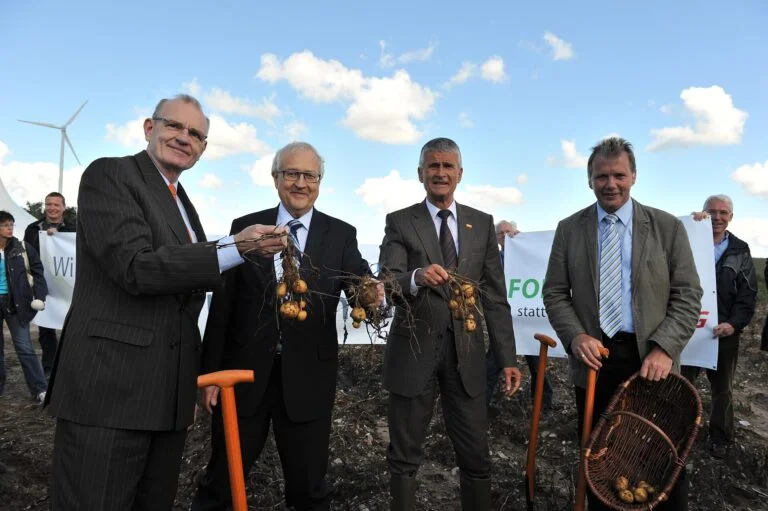
Deutschland: Stärkeverarbeiter hält trotz Ertragseinbußen von 10–50 % am Vertragspreis von 95 €/t für 2027 fest


