Das Pavlodar-Phänomen: Wie Kartoffeln die Landwirtschaft in Kasachstan verändern
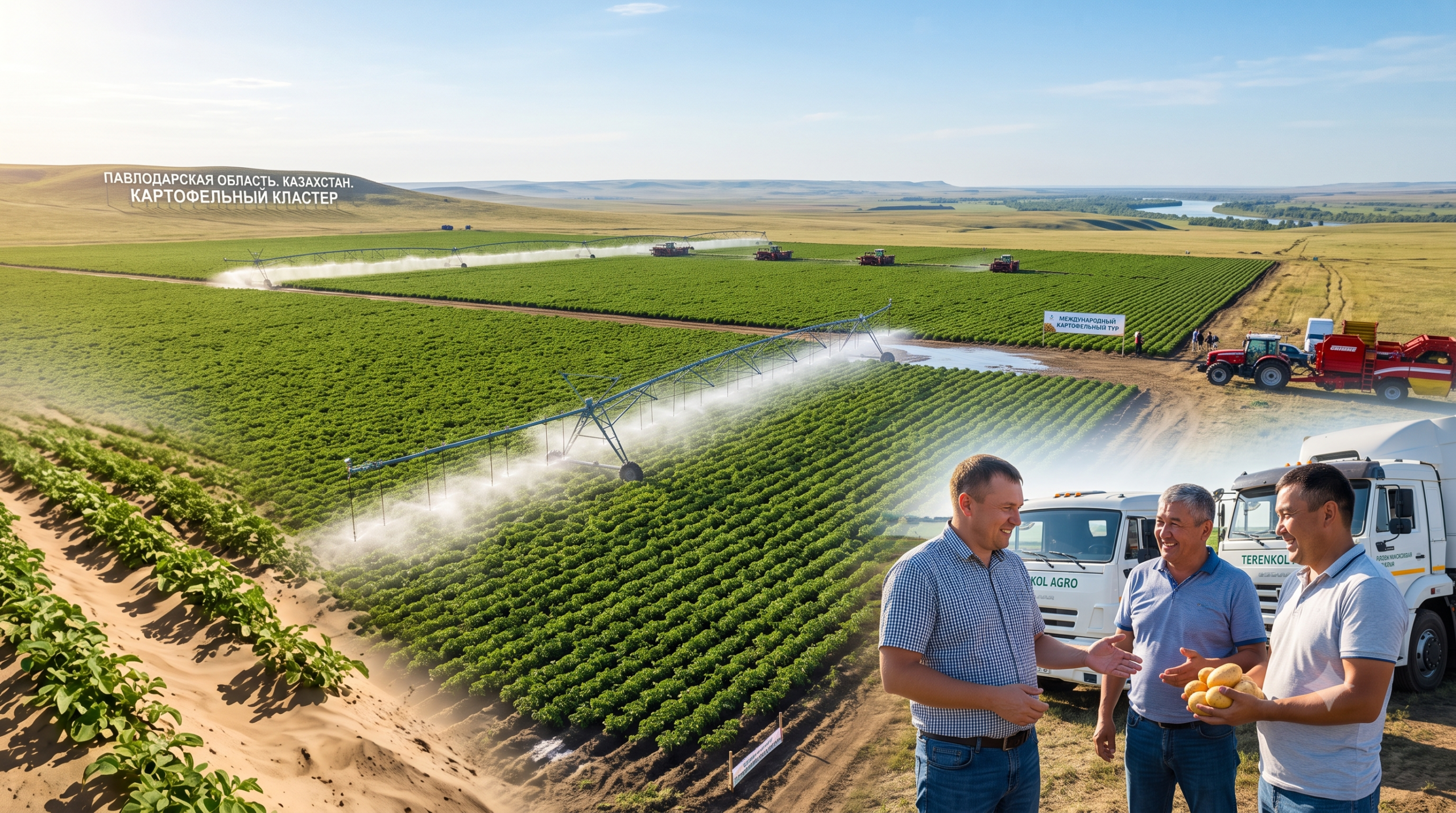
Sonderbericht der Internationalen Kartoffeltour: Region Pavlodar, Kasachstan
Heute ist die Region Pavlodar einer der wichtigsten Kartoffelanbau‑Cluster in Kasachstan. Im Rahmen unserer Internationalen Kartoffeltour besuchten wir die Bezirke Zhelezinsky und Terenkolsky, um aus erster Hand zu sehen, wie lokale Bauern auf sandigen Böden Rekord‑Erträge bei abnormaler Hitze und Ressourcenknappheit ernten. Sie liefern das “zweite Brot” nicht nur für ihre eigene Region, sondern auch für die Hauptstadt, während sie ihre Produkte in südliche Länder exportieren.
Sand and Sun: Perfect Washing and Harsh Dunes


The specifics of potato farming in this region are dictated by nature itself. The local soils are predominantly sandy. On one hand, this is an undeniable advantage during the harvest.
“Wenn es während der Ernte keinen Regen gibt, kommen unsere Kartoffeln perfekt sauber heraus, als kämen sie gerade aus der Waschmaschine,” teilt Dmitry Kozinets, Leiter der “Terenkol Agro” Bauernfarm, der aus dem Transportgewerbe in 2017 in die Landwirtschaft gewechselt ist.
However, sand has its dark side—severe wind erosion. Timur Kabdulov, head of the “KAP” peasant farm, who cultivates 550 hectares of potatoes, talks about battling the elements:
“We have terrible wind erosion here. If you make a classic fallow land with soil cultivation, dunes 50 centimeters high grow right at the end of the fields. Therefore, I try not to touch the soil; I use chemicals and sow oats to secure the topsoil.”
Die zweite Herausforderung ist das Klima. Abnormale Hitze (über 30°C für einen Monat) erfordert kontinuierliche Bewässerung. Die Bauern gießen 15‑20 mm Wasser, und die Bewässerungsmaschinen stoppen nie eine Minute.
From Grain to Vegetables: Economics and Profit Margins
It is interesting to observe how the profile of the farms is changing. Many managers and agronomists were staunch “grain growers” in the past. What makes them switch to vegetables? The answer is simple: economics.
For large livestock complexes, potatoes become a financial cushion. Nikolay, an agronomist at a young farm with 5,000 heads of cattle, explains this strategy:
“Der Anbau von Futtermitteln in unserer nicht bewässerten (bagara) Zone ist sehr schwierig. Wir haben bewässerte Parzellen eingeführt, Reservoirs gebaut und Brunnen 850 Meter tief gebohrt. Dies sind enorme Kredite. Es dauert lange, bis das Futtermittel wächst und die Kuh Milch gibt. Aber Kartoffeln und Karotten bedeuten sofortiges Geld. Wir bauen sie an, verkaufen sie, und im selben Jahr haben wir Betriebskapital, um unsere Schulden zu tilgen.”
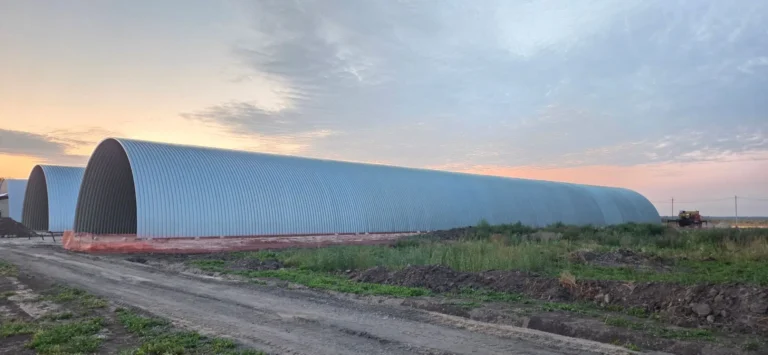
The entry barrier to this business is high today. According to Dmitry Kozinets, with the capital he started with 9 years ago (buying an old Soviet DDA sprinkler system), he could only manage about 10 hectares today. Now, farmers use modern frontal and pivot machines, powerful equipment (such as Grimme), and build state-of-the-art vegetable storages with government support (subsidies for storage facilities are about 800,000 tenge per ton, and up to 30% for elite seeds).
Der unbestrittene Spitzenreiter: Gala‑Sorten
There is a monopoly of one variety in the fields of the Pavlodar region. The vast majority of farms rely on the Gala variety. The reasons are pragmatic: excellent keeping quality, stable yield, and high market demand. Experiments with red varieties show that local clients and buyers from Uzbekistan (the main export destination) prefer yellow potatoes.
Farmers try to purchase seeds of the highest reproduction (elite seeds are even imported from Germany) and propagate them on their farms, providing themselves with excellent quality planting material for several years ahead without losing yield.
Agronomy: The Battle for Tuber Health
Der Kartoffelanbau erfordert immense Aufmerksamkeit. Eldar Usmanov, Agronom bei “Astyk PV” LLP (2,500 Hektar unter Bewässerung), vergleicht seine Arbeit mit Medizin:
“A potato is like a living creature. It needs a lot of attention; you have to constantly monitor it. The plant is alive, and we are its doctors. We must ensure that it stays healthy.”
And there is plenty to treat. Under intensive irrigation, farmers face a complex of diseases:
- Rhizoctoniose (schwarzer Spross): Eines der Hauptprobleme auf hellen Böden, das zu Rissen in den Knollen führt. Die Bekämpfung erfolgt durch Anwendung moderner Fungizide (Azoxystrobin, Fludioxonil) direkt beim Pflanzen.
- Alternariosis (early blight): Appears during heat stress, starting in late June.
- Late Blight (Phytophthora): Although not an annual disaster, it keeps farmers on high alert. The number of preventive treatments in some farms has grown from 2 to 8-9 per season.
- Schädlinge: Nematoden und Kabelwürmer erfordern ebenfalls Anpassungen im Fruchtwechsel und den Einsatz von Insektiziden (z. B. Fipronil).
Das Düngungsprogramm ist ebenfalls intensiv. Beeindruckende Dosen werden dem Boden vor dem Pflanzen und Anhäufen zugeführt: 500 kg Diammoniumphosphat (DAP), Kaliumchlorid und -sulfat sowie Salpeter.
Infrastructural Barriers: Water and Electricity
The main obstacle to the development of irrigated agriculture in the region today is not a lack of land or equipment, but an electricity shortage.
According to Eldar Usmanov, when the active irrigation season begins and neighboring large farms simultaneously turn on dozens of pumping stations, there is a catastrophic lack of voltage in the grid.
The second problem is access to water. Farms located far from the Irtysh River (up to 150 km) have to drill ultra-deep wells (up to 850 m) with low yields (only 20 l/s) and build huge storage ponds, which requires massive investments.
The Human Factor
Trotz Hitze, Sandstürmen, Pflanzenkrankheiten und Stromausfällen sind die Menschen hier wirklich leidenschaftlich bei ihrer Arbeit. Die meisten Höfe sind familiengeführt, wobei das Wissen von Vätern an die Kinder weitergegeben wird und die Zuständigkeiten klar unter Brüdern und Schwestern verteilt sind (wie beispielsweise auf dem “Kundyz” Bauernhof, der von 40 Hektar im 1993 auf heute 15,000 Hektar gewachsen ist).
When asked what gives them strength when they feel like giving up, the farmers unanimously answer: the support of their families, love for their work, and, of course, the magic of the result.
“Der angenehmste Teil für mich ist der Ernteprozess,” fasst Agronom Nikolay zusammen. “Wenn Sie sehen, was Sie über die Saison angebaut haben und ernten, gibt es Freude im Herzen, wenn alles geklappt hat und reibungslos verläuft.”