Global: Keeping Soil Near Field Capacity 2–6 Weeks After Tuber Initiation Suppresses Common Scab
Keeping soil near field capacity for 2–6 weeks after tuber initiation suppresses common scab; manure and undecomposed organic matter can make it worse.
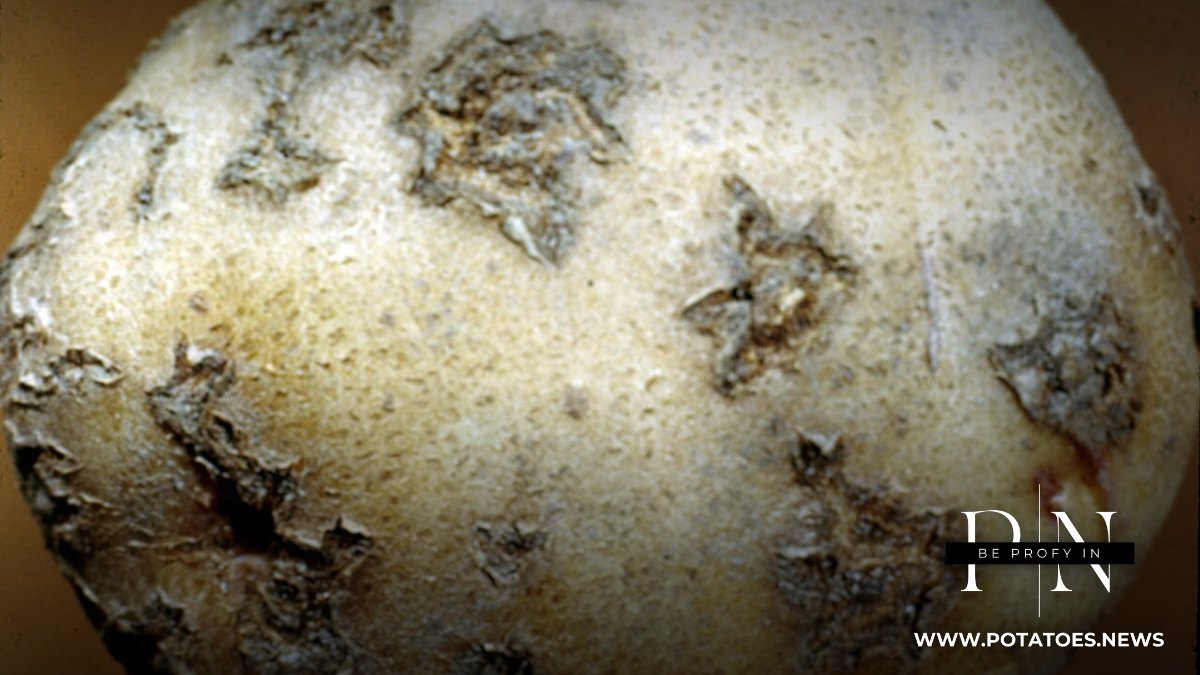
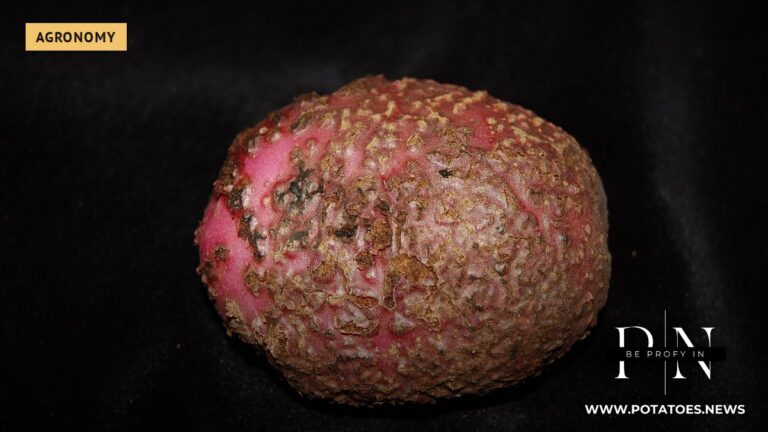
Common scab, caused mainly by the soil bacterium Streptomyces scabies, produces corky lesions on tubers. The pathogen infects young, developing tubers mainly through lenticels, the small breathing pores in the skin, and occasionally through wounds; it does not invade directly through intact skin.
The infection window is short and early. Cornell University places it in the 2 to 6 weeks following tuber initiation; University of Idaho guidance puts the most susceptible period at about 2 to 7 weeks after emergence.
Soil moisture during that window is the main management lever. Cornell advises keeping soil at moisture levels above −0.4 bar, near field capacity, during this period. The mechanism is biological competition: bacteria that flourish at high soil moisture appear to outcompete S. scabies on the tuber surface.
Soil acidity also matters. Cornell reports that common scab is controlled or greatly suppressed at soil pH 5.2 or lower; University of Idaho notes the pathogen grows best near pH 7.0 and that pH below 5.5 generally inhibits its activity.
Organic matter does not reliably reduce scab. Both Cornell and University of Idaho note that soils rich in undecomposed organic matter, such as manure, favour the disease, and manure applications can increase infection. Rotation effects are also mixed. In Maine trials, a mustard blend rotation reduced scab by 13–34% at one site in one year, while at other site-years rotations had no significant effect.
Sources: Cornell University (M. T. McGrath), 2021; University of Idaho, CIS 386; Larkin & Lynch, Horticulturae, 2018